

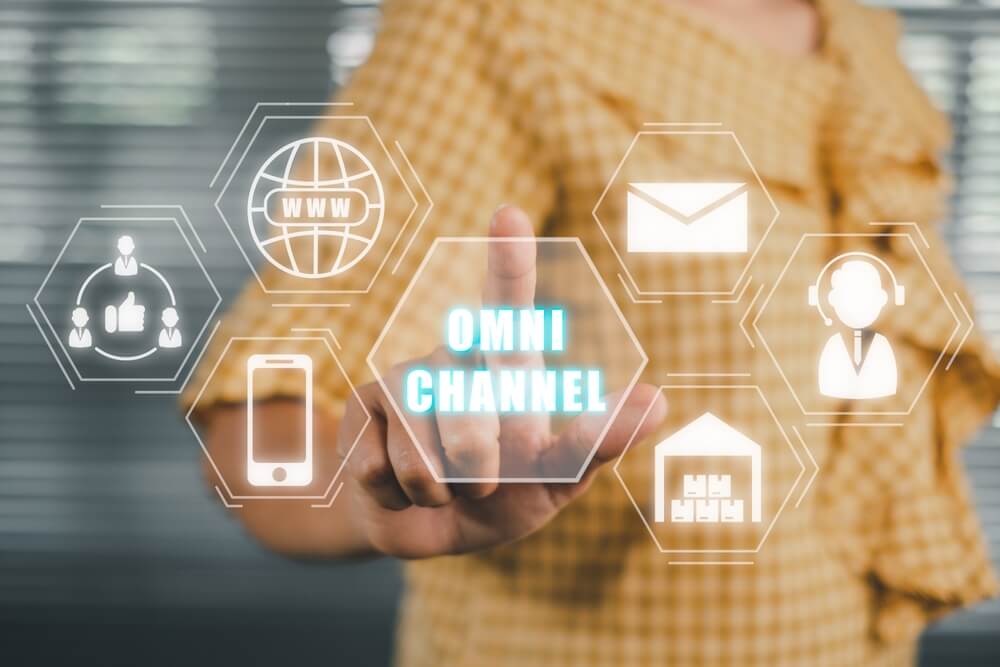
The modern commerce landscape has fundamentally shifted. Modern consumers no longer interact with brands through a single channel. Instead, a typical buyer journey might begin with an Instagram advertisement, proceed to a desktop web search, continue through a mobile application download, and culminate in an in-store transaction.
As customer touchpoints proliferate, operating isolated communication channels creates significant friction. Consumers expect seamless continuity across every point of contact. This expectation has transformed omnichannel marketing from an innovative growth tactic into a foundational business requirement. For major enterprises managing large customer bases, failing to implement an integrated omnichannel strategy directly damages revenue, customer retention, and brand equity.
Defining the Shift From Multichannel to Omnichannel
Understanding why omnichannel execution is vital requires distinguishing it from traditional multichannel approaches. While the terms are frequently interchanged, their operational philosophy and technical structures are distinctly different.
-
Multichannel Marketing: Focuses on operating across various independent channels such as social media, email, brick and mortar stores, and websites. In a multichannel framework, each channel operates in a functional silo. The social media team manages posts, the email marketing team manages campaigns, and physical store managers oversee retail operations. Customer data rarely flows smoothly between these divisions, resulting in fragmented experiences.
-
Omnichannel Marketing: Places the customer at the center of the ecosystem rather than the individual channels. Every platform, device, and interaction feeds into a unified data architecture. An omnichannel system ensures that an action taken on one channel instantly updates the customer profile across all other channels, maintaining complete contextual continuity.
The Factors Driving Mandatory Omnichannel Adoption
Several structural forces have made integrated marketing frameworks essential for enterprise survival. Companies that fail to adapt risk losing market share to competitors who offer more fluid purchasing experiences.
Shifting Consumer Behavior and Expectations
Today’s buyers expect convenience and speed. A customer browsing items on a smartphone during a morning commute wants to see those same items saved in their desktop cart later that evening. If they visit a physical store the following day, they expect customer service representatives to access their account history without forcing them to repeat information.
When businesses fail to connect these interactions, consumers perceive the friction as a lack of operational competence. Modern buyers systematically abandon brands that require redundant effort.
Proliferation of Digital Touchpoints
The sheer number of ways customers discover and evaluate products has expanded dramatically. Beyond traditional websites and physical storefronts, enterprises must now engage across:
-
Mobile applications and push notifications
-
Social commerce storefronts and messaging channels
-
Interactive voice assistants and smart devices
-
Web messaging widgets and automated chatbots
-
Targeted email automation workflows
Managing these touchpoints independently leads to conflicting promotional messages, inconsistent pricing, and disjointed brand messaging. An omnichannel infrastructure harmonizes these channels into a single operational stream.
Advanced Enterprise Data Capability
Legacy data architectures relied on batch processing and disconnected software systems. Modern enterprise technology platforms allow organizations to consolidate customer data platforms in real time. Because the technical capability to unify customer data now exists at scale, marketplace standards have elevated accordingly. Organizations that continue to operate with fragmented systems operate at a severe analytical disadvantage.
Core Advantages of Implementing an Omnichannel Strategy
Adopting an integrated omnichannel model yields compounding operational and commercial benefits across the entire organization.
1. Elevated Customer Lifetime Value
Customers who engage across multiple channels demonstrate higher loyalty and greater purchasing frequency than single-channel buyers. When an enterprise provides consistent messaging and effortless transitions across touchpoints, buyer satisfaction increases. This satisfaction translates directly into higher retention rates, reduced churn, and a significantly higher customer lifetime value.
2. Higher Conversion and Engagement Rates
Reaching consumers with contextually relevant communication dramatically improves conversion performance. For instance, sending an automated push notification about an abandoned digital shopping cart that acknowledges an earlier in-store inquiry feels helpful rather than intrusive. By delivering the right message on the preferred platform at the optimal moment, enterprises remove barriers to purchase.
3. Integrated Brand Identity and Positioning
Brand equity depends heavily on consistency. If a company projects a premium image on its digital storefront but delivers a clunky, disjointed experience inside its mobile app, the brand promise collapses. Omnichannel marketing guarantees that visual identity, tone of voice, promotional offers, and customer support standards remain uniform across every brand platform.
4. Superior Data Capture and Strategic Insights
A unified channel strategy provides a holistic view of customer behaviors and preferences. Instead of analyzing isolated metric sets like email open rates or store foot traffic in isolation, business leaders can analyze end-to-end buyer paths. These macro insights inform smarter decisions regarding inventory management, product development, advertising expenditure, and media allocation.
Essential Components of an Omnichannel Architecture
Building an enterprise-grade omnichannel operation requires aligning technology, culture, and strategy. Organizations must establish three essential pillars:
Centralized Data Management
A reliable omnichannel framework depends on a centralized data layer, typically powered by a Customer Data Platform or an integrated enterprise Customer Relationship Management system. This system acts as the single source of truth, collecting real time behavioral signals from online and offline interactions and feeding them back to all marketing engines.
Interoperable Technology Stack
Enterprise software tools must communicate seamlessly via application programming interfaces. Marketing automation software, e-commerce platforms, point-of-sale systems, and inventory management tools must exchange information instantly. Without API connectivity, cross-channel synchronization breaks down.
Alignment of Organizational Structures
Technology alone cannot solve cross-channel friction if organizational structures remain siloed. Internal incentive structures must reflect unified goals. For example, physical store personnel should not view online sales as competing revenue, but rather as part of a collective customer relationship. Cross-functional alignment between marketing, sales, technology, and customer support teams is mandatory.
Overcoming Obstacles in Omnichannel Execution
While the strategic value of omnichannel marketing is clear, enterprise execution presents specific logistical challenges:
-
Legacy Systems Integration: Older corporate infrastructures often lack modern connectivity capabilities, requiring significant technology modernizations or custom middleware solutions.
-
Data Privacy and Governance Standards: Collecting and synchronizing customer data across multiple channels requires strict adherence to international data privacy regulations and security protocols.
-
Content Generation Scale: Delivering personalized, context aware messaging across dozens of distinct channels demands a robust content strategy and automated asset creation workflows.
Enterprise leaders who systematically address these operational barriers establish a formidable competitive moat that legacy-bound competitors cannot easily replicate.
Frequently Asked Questions
How does omnichannel marketing differ from headless commerce?
Omnichannel marketing is a strategic business approach focused on providing a unified customer experience across all physical and digital touchpoints. Headless commerce is an underlying software architecture that decouples the frontend user interface from the backend commerce logic, making it easier to deliver omnichannel experiences across diverse platforms.
What is the typical timeline for an enterprise to transition to an omnichannel model?
A full enterprise transition typically takes between twelve and twenty-four months. The process involves auditing existing systems, integrating data pipelines, updating software stacks, and realigning internal departmental structures. However, organizations usually deploy phased rollouts to achieve incremental improvements much earlier.
How do physical brick and mortar stores fit into an omnichannel framework?
Physical stores serve as vital interactive hubs within an omnichannel model. They act as fulfillment centers for online orders, return locations for web purchases, experiential showcase environments, and physical data collection points via mobile integration and loyalty programs.
What primary metrics should executives track to evaluate omnichannel success?
Executives should focus on holistic performance indicators, including overall customer lifetime value, cross-channel retention rates, customer acquisition cost across blended channels, average order value, and cross-platform conversion attribution metrics.
Why do legacy CRM systems struggle to support omnichannel capabilities?
Legacy CRM platforms were engineered primarily for batch data processing and periodic manual updates within single departments. Omnichannel strategies require real time data synchronization, event driven automation, and seamless communication across disparate software systems that older architectures were not built to handle.
How does supply chain management impact omnichannel marketing success?
Marketing messaging relies heavily on accurate inventory promises. If an omnichannel campaign promotes real time local store availability or rapid delivery options, the underlying supply chain and inventory tracking systems must be perfectly synchronized to avoid order cancellations and customer frustration.
Comments are closed.